
Current Affairs 16th – 17th May 2026 Daily Current Affairs 2026
India Rejects PCA’s Decision on the Indus Waters Treaty
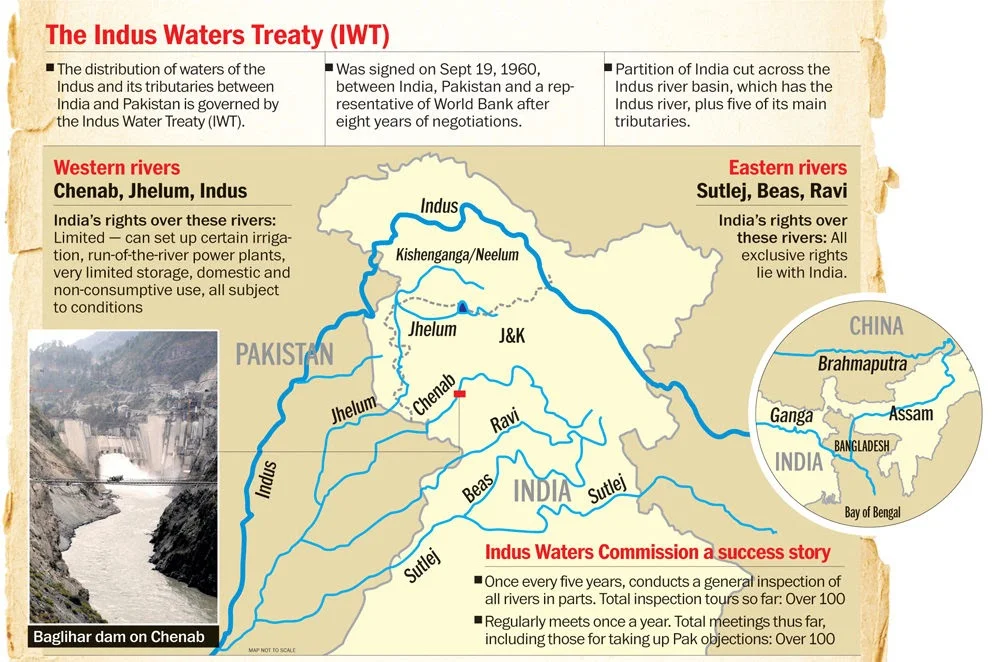
India has rejected the May 2026 award issued by the Permanent Court of Arbitration (PCA) at The Hague regarding the “maximum pondage” (water storage capacity) limits at Indian hydroelectric projects on the Indus river system.
- India reiterated that the tribunal is “illegally constituted” and maintained that the Indus Waters Treaty (IWT), 1960, remains in abeyance following the 2025 Pahalgam terror attack.
Dispute Regarding the Hydroelectric Projects
- The Projects:
- Kishenganga Project: A 330 MW run-of-the-river hydroelectric project on the Kishenganga River (a tributary of the Jhelum) in Jammu and Kashmir.
- Ratle Project: An 850 MW hydroelectric project on the Chenab River in Jammu and Kashmir.
- Pakistan’s Objection: Pakistan consistently objects to the design features of these projects, arguing that the pondage (storage) and spillways violate the IWT and will adversely affect the flow of water into its territory.
- Pakistan argues that India is building pondage capacities that are far larger than what is technically required to generate power.
India’s Objection to the Court of Arbitration
- Parallel Proceedings: The core of the legal dispute lies in Pakistan’s insistence on bypassing the Neutral Expert mechanism.
- In 2016, Pakistan requested the World Bank to appoint a CoA, while India simultaneously requested a Neutral Expert to look into the technical designs.
- Violation of the Graded Mechanism: India argues that initiating two simultaneous processes (Neutral Expert and CoA) for the exact same dispute violates the sequential, graded dispute resolution mechanism mandated by the treaty.
- World Bank’s Role: The World Bank initially paused both processes in 2016 to prevent conflicting rulings.
- However, in 2022, it lifted the pause, allowing both proceedings to run concurrently. While India has participated in the Neutral Expert proceedings, it has completely boycotted the CoA, terming it an “illegal” parallel process.
- Suspension/Abeyance (2025-2026): Following the deadly cross-border terror attack in Pahalgam in April 2025, India linked water sharing to national security, placing the treaty “in abeyance” until Pakistan irrevocably stops supporting cross-border terrorism.
Indus Waters Treaty (IWT), 1960
- About: The IWT is a water-distribution treaty signed between India and Pakistan in Karachi in 1960, brokered by the World Bank, to manage the water available in the Indus River and its tributaries.
- Allocation of Eastern Rivers: The waters of the Beas, Ravi, and Sutlej were allocated to India for exclusive, unrestricted use.
- Allocation of Western Rivers: The waters of the Chenab, Indus, Jhelum were allocated largely to Pakistan.
- India’s Rights on Western Rivers: India is permitted limited, non-consumptive uses on the western rivers. This includes domestic use, navigation, agriculture, and run-of-the-river hydroelectric power generation, provided India adheres to strict technical and design parameters outlined in the treaty annexures
- Dispute Resolution Mechanism under the IWT: The IWT provides a graded, three-tiered mechanism to resolve differences:
- Permanent Indus Commission (PIC): Any questions are initially resolved by the PIC, which comprises commissioners from both countries.
- Neutral Expert (NE): If unresolved, “differences” of a technical nature are referred to a Neutral Expert appointed by the World Bank.
- Court of Arbitration (CoA): If the Neutral Expert decides the issue is legal rather than just technical, or if both parties agree, a formal “dispute” is referred to a Court of Arbitration.
Permanent Court of Arbitration
- The Permanent Court of Arbitration (PCA) is an intergovernmental organization established in 1899 during the first Hague Peace Conference to facilitate arbitration and peaceful resolution of disputes between States, international organizations, and private parties. It is the oldest global institution dedicated to international dispute resolution.
- Its foundational treaty is the 1899 Convention for the Pacific Settlement of International Disputes, which was later revised at the second Hague Peace Conference in 1907.
- It is an independent intergovernmental organization. It is not a United Nations (UN) agency, although it was granted Permanent Observer status at the UN General Assembly in 1993.
Daily Current Affairs 2026
Bhojshala Temple
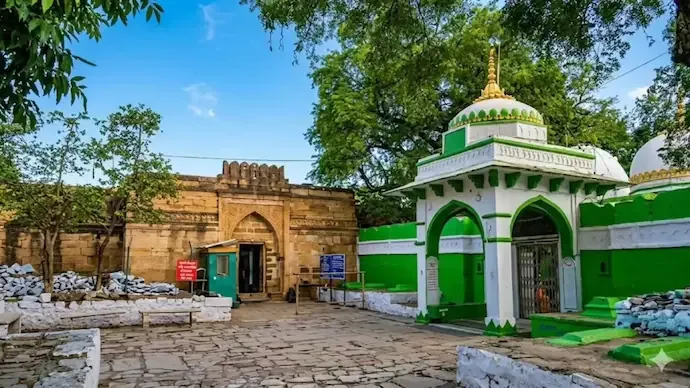
The Madhya Pradesh High Court declared the disputed Bhojshala-Kamal Maula Mosque complex in Dhar district as a temple dedicated to Goddess Vagdevi (Saraswati). The court quashed a 2003 Archaeological Survey of India (ASI) order that had allowed shared worship by Hindus and Muslims at the site.
- The court held that the Places of Worship (Special Provisions) Act, 1991, does not apply to the site because it is a protected monument under the Ancient Monuments and Archaeological Sites and Remains (AMASR) Act, 1958.
- Section 4(3) of the 1991 Act excludes ancient and historical monuments covered under the 1958 Act from the freeze on religious character.
Historical Background of the Bhojshala Complex
- Parmar Dynasty and Raja Bhoj: The site is historically associated with Raja Bhoj (1010–1055 CE) of the Parmar dynasty, recognized as a great patron of art, literature, and education.
- He established the complex as a prominent centre of Sanskrit learning, which housed a temple dedicated to Goddess Saraswati (Vagdevi).
- The site uniquely preserves two Sarpabandha (serpentine chart) pillar inscriptions. These serve as educational tools, charting the Sanskrit alphabet, noun/verb terminations, and the ten tenses and moods of Sanskrit grammar.
- Prakrit Odes: Walls within the complex feature stone slabs engraved with two distinct odes dedicated to the Kurma-Avatara (the tortoise incarnation of Lord Vishnu), composed in the ancient Prakrit language.
- Classical Sanskrit Drama: Notably, slabs lining the mihrab (prayer niche) contain a theatrical composition written by Royal Tutor Madana, a disciple of the prominent Jain scholar Ashadhara, dating back to the reign of King Arjunavarma.
- The Idol of Vagdevi: An intricately carved idol of Goddess Saraswati was discovered at the site during excavations in the early 20th century. This idol is currently housed in the British Museum in London.
- Kamal Maula Mosque Claims: The Muslim community maintained that the site is the Kamal Maula Mosque, arguing that the foundation was laid by Hazrat Maulana Kamaluddin Chishti around 1306–1307 AD during Islamic rule.
- Historical Records: Historical literature, including the Imperial Gazetteer of India (1908), noted that the existing mosque was constructed using the remains of an older Hindu temple, with carved slabs actively reused in the floor and the mihrab.
Madhya Pradesh High Court Judgment
- Rejection of Historical Proclamation: The bench rejected the Muslim side’s reliance on an August 1935 Ailan (official proclamation) by the princely State of Dhar under the Government of India Act, 1935, noting that the Act itself was not enforced until April 1937.
- Unlike the Babri Masjid dispute, which was treated as a title suit involving ownership claims, the Bhojshala case was considered a writ petition under Article 226 seeking enforcement of the fundamental right to worship.
- Alternative Allotment for Mosque: To maintain complete justice and secure religious rights, the court directed the State government to consider applications for allotting alternative, suitable land within Dhar district for the construction of a mosque or prayer site.
- Administrative Stewardship: The ASI has been granted full supervisory, management, and administrative control over the property to regulate religious access, preserve the 11th century monument, and manage affairs related to Sanskrit learning at the site.
Raja Bhoj
- Rise of the Dynasty: Raja Bhoj, widely recognized as Mihir Bhoja, was the most illustrious emperor of the Gurjara-Pratihara empire.
- Mihir Bhoja’s Ascendancy (836 – 885 AD): As the grandson of Nagabhata II, Mihir Bhoja ascended the throne in 836 AD.
- He established the dynasty as the dominant power in northern India by defeating prominent rivals, including the Pala king Devapala and the Rashtrakuta king Amoghavarsha.
- At its peak, his empire stretched from the foothills of the Himalayas to the Narmada River, and from Bengal to Sindh.
- Capital and Military Might: His empire was administered from the capital at Kannauj (also known as Mahodaya).
- Historical accounts from Arab travelers specifically note that the Pratihara rulers possessed India’s strongest cavalry.
- Religious Patronage: Being a great follower of Vaishnavism, he assumed the prestigious title of “Adivaraha” (the boar incarnation of Lord Vishnu), a title well-documented on his coinage.
- Diplomatic and Regional Supremacy: Regional dynasties like the Chandalas and the Kalachuris, as well as the Arabs of Sindh, acknowledged his supremacy.
- Furthermore, the prominent Arab traveler Al-Masudi referred to him as “King Baura.”
- The Arab historian Sulaiman praised his unmatched cavalry and the safety of his empire.
Gurjara-Pratiharas
- Origin Theories: Most historians believe the term Gurjara denotes a geographical region (Gurjaradesha—modern Rajasthan and Gujarat) where the clan originated or settled, rather than a specific ethnic identity.
- Their exact origins are debated. The bardic tradition of Rajasthan classifies them among the four Agnikula (fire-born) Rajput clans (alongside Chalukyas, Parmaras, and Chahamanas) created at Mount Abu to protect against foreign aggression.
- They called themselves “Pratihara” (doorkeeper), claiming descent from Lakshmana.
- Founder: Nagabhata I (730-756 AD) is considered the actual founder, renowned for successfully defeating Muslim forces from the Arab region, thereby halting their advance into India.
- The Tripartite Struggle: The Pratiharas were central figures in the prolonged Tripartite Struggle against the Palas of Bengal and the Rashtrakutas of the Deccan for dominance over the strategically crucial regions of Kannauj, Malwa, and the upper Ganga valley.
- Architectural Legacy (Mahu-Gujjara Style): They were prolific builders. Notable structures include:
- Teli-ka-Mandir (Gwalior Fort, MP): A magnificent architectural synthesis combining a North Indian Nagara base with a South Indian Dravidian-style Valabhi (barrel-vaulted) roof.
- Bateswar Temples (Morena, MP): A cluster of nearly 200 stone temples built during the early Pratihara phase, dedicated to Shiva, Vishnu, and Shakti.
- Osian Temples (Jodhpur, Rajasthan): Contains prominent early structures, including the Mahavira Jain Temple, which is the oldest surviving Jain temple in Western India.
- Literary Patronage: Under King Mahendrapala I, the court flourished with scholars like Rajashekhara, who authored classic Sanskrit works including Karpuramanjari and Kavyamimansa.
- Decline and Fragmentation: The empire weakened due to constant Rashtrakuta attacks (notably by Indra III) and the rise of powerful feudatories asserting independence (like the Paramaras of Malwa, Chandelas of Bundelkhand, and Chahamanas/Chauhans of Ajmer).
- The fatal blow came when Mahmud of Ghazni captured Kannauj in 1018, causing the dynasty to shatter into smaller regional states.
Daily Current Affairs 2026
51st Statehood Day of Sikkim
The Vice President addressed the 51st Statehood Day celebrations of Sikkim on 16th May in Gangtok.
- The 36th Constitutional Amendment Act, 1975, formally integrated Sikkim as the 22nd State of the Indian Union on 16th May, 1975. This historic step came immediately after a landmark April 1975 referendum in Sikkim, where over 97% of voters overwhelmingly backed the abolition of the monarchy.
- This full integration replaced the framework established just a year prior by the 35th Constitutional Amendment Act, 1974, which had temporarily accorded Sikkim the unique status of an “Associate State.”
Brief History of Sikkim Statehood
- Chogyal Monarchy: Prior to its integration into India, Sikkim was a sovereign Himalayan kingdom governed by the hereditary Namgyal dynasty (the Chogyals) from 1642 until 1975.
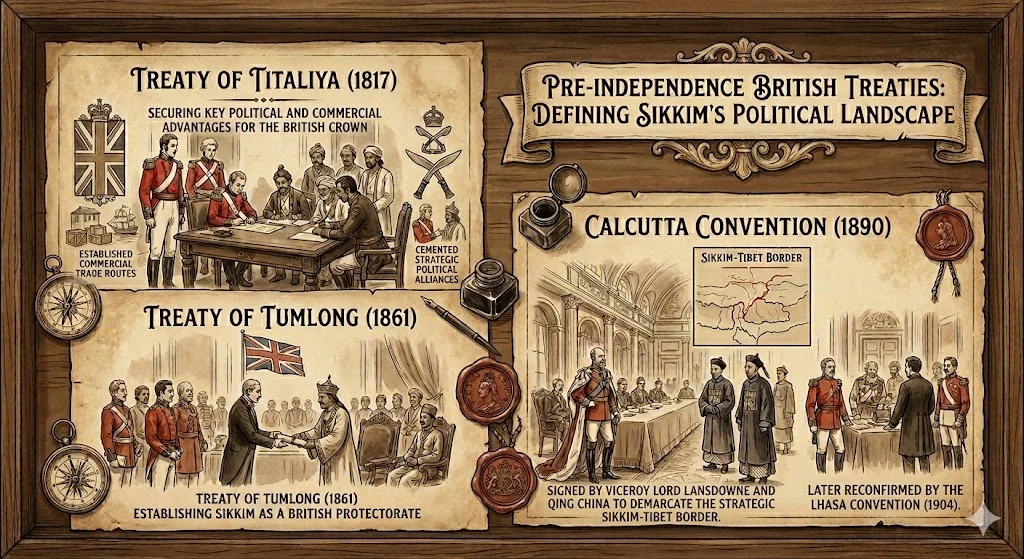
- Pre-Independence British Treaties: British colonial interaction was defined by three critical accords:
- Post-Independence Protectorate Era (1947–1974): Following India’s independence, the Indo-Sikkim Treaty of 1950 formally repositioned Sikkim as an Indian “protectorate.” While retaining internal autonomy, its defense, external affairs, and communications were handed over to the Government of India.
- Special Provisions Under Article 371F: Article 371F safeguards old Sikkimese laws, protects local demographics by restricting land ownership to native residents, and empowers the Governor with special responsibilities for maintaining peace.
Conversion of Coal Plant to Nuclear Power Plant
The government has shortlisted 3 ageing thermal power plant sites for conversion into nuclear power projects to help meet the nation’s long-term decarbonization goals.
- This comes in the backdrop of the passage of the SHANTI Act, 2025 (Sustainable Harnessing and Advancement of Nuclear Energy for Transforming India Act) that marks a major paradigm shift by allowing private players into nuclear operations and fuel management, breaking decades of strict public-sector monopoly.
- About: Two of the shortlisted sites are considered suitable for large nuclear reactors of 700 megawatt-electric capacity, while one site may host smaller 220 megawatt-electric reactors.
- The move is driven by India’s ageing coal power fleet, rising emissions from old plants, tighter environmental norms, and the availability of land, water and grid infrastructure at existing thermal power sites.
- Stringent Technical Screening: Sites are evaluated on a 17-point checklist including seismotectonics, water availability, and meteorology. Sites located in Earthquake Zone V or having active faults within a 5-kilometre radius are strictly disqualified.
- The primary bottleneck for deploying large 700 MWe Pressurized Heavy Water Reactors (PHWRs) at these sites is the mandatory 1-km exclusion zone radius where no habitation is permitted.
- To accommodate these constraints, the Department of Atomic Energy (DAE) and Atomic Energy Regulatory Board (AERB) have given in-principle approval to reduce exclusion zones—down to 700 meters for 700 MWe reactors and 500 meters for 220 MWe reactors—potentially paving the way for Small Modular Reactors (SMRs).
- Significance: This initiative aligns with India’s target to scale up its civil nuclear power capacity from the current 8.8 gigawatt-electric (GWe) to 100 GWe by 2047.

