Current Affairs 18th May 2026 Latest Current Affairs 2026
India’s Total Sugar Export Ban
The Directorate General of Foreign Trade (DGFT) has issued a notification placing the export of all categories of sugar (raw, white, and refined) under the “Prohibited” category with immediate effect until 30th September 2026.
- This regulatory intervention marks a strategic shift from quantitative restrictions (“Restricted” category) to a total freeze on outbound shipments, driven by cascading geopolitical and agro-climatic vulnerabilities.
Summary
- India has imposed a complete ban on sugar exports till September 2026 to safeguard domestic supply, control inflation, and prepare for future risks from El Niño, fertilizer disruptions, and declining sugar stocks.
- The ban highlights deeper structural issues in India’s sugar sector, including water stress, pricing distortions (FRP-SAP), cane arrears, and the growing importance of ethanol blending and bioenergy as long-term solutions.
What are the Reasons for the Total Sugar Export Ban?
- The El Niño-Induced Agro-Climatic Threat: While the 2026–27 crop is secure, global meteorological models predict a moderate-to-strong El Niño persisting through 2026.
- El Niño suppresses the Southwest Monsoon, threatening the crucial planting window for the 2027–28 sugar year.
- Sugarcane has a prolonged vegetative phase. In North India (Suru crop), it takes 11–12 months. In Maharashtra (Pre-seasonal and Adsali crops), it takes 15–18 months.
- Moisture stress during late 2026 will contract supplies two years later. The government is locking down current surpluses to build a multi-year buffer.
- Geopolitical Spillover on Agri-Inputs: Sugarcane is a highly water and fertilizer-intensive crop.
- The geopolitical escalation in West Asia threatens maritime chokepoints, risking massive disruptions in the global supply chains for nitrogenous and phosphatic fertilizers.
- Input shortages directly depress cane yields and sucrose recovery rates.
- The geopolitical escalation in West Asia threatens maritime chokepoints, risking massive disruptions in the global supply chains for nitrogenous and phosphatic fertilizers.
- Inflationary Targeting: Sugar holds a sensitive weight in the Consumer Price Index (CPI).
- Amidst global volatility in food and fuel matrices, the government is exercising extreme caution to prevent domestic speculative hoarding and localized price shocks.
- Administrative Asymmetry: Banning exports seals off the international leak, ensuring domestic obligations are met first. Sugar mills must file monthly ‘P-II’ returns declaring stock levels, which dictate their domestic release quotas.
- The government suspects discrepancies between declared virtual ledgers and actual physical inventory in mill godowns.
- Exemptions: The prohibition excludes a minimal preferential quota of approximately 14,500 tonnes earmarked for concessional duty exports to the European Union (EU) and the United States.
What is the Current Status of the Indian Sugar Industry?
- Global Standing: India retains its position as the world’s second-largest producer of sugar (trailing only Brazil) and is the world’s largest consumer.
- In 2024, India was the world’s third-largest exporter of raw sugar.
- Current Output (2025–26 Data): India’s sugar production for the 2025–26 sugar year (October–September) is estimated at 279 lakh tonnes (lt).
- Supplemented by an opening stock of over 50 lt, total domestic availability stands at 329 lt.
- The sugar sector is significant for the rural economy as it not only brings income stability to farmers and profits to mills, but contributes up to Rs 8,000 crore annually to the centre through taxes including GST. The annual turnover of the sugar sector is estimated to be between Rs 50,000 crore and Rs 60,000 crore.
- Consumption vs. Surplus: With domestic consumption pegged at approximately 28 million tonnes (280 lakh tonnes), the industry consistently generates a structural surplus.
- However, end-of-season closing stocks are tightening (projected at 42.5 lakh tonnes), leaving a comfortable but reduced 1.8-month consumption buffer.
- Spatial Distribution and Regional Shifts: The industry exhibits a distinct geographical bifurcation, with ongoing shifts dictated by agro-climatic realities and state policies.
- Sub-Tropical North (Uttar Pradesh, Haryana, Punjab): The region suffers from lower sucrose recovery rates due to extreme winter temperatures and shorter crushing windows (November to April).
- Tropical South (Maharashtra, Karnataka, Tamil Nadu): This belt offers superior sucrose recovery and longer crushing seasons (up to 18 months for Adsali crops).
- Maharashtra ended the 2025-26 crushing season as India’s largest sugar-producing state, with output of 99.20 lakh tonnes, ahead of Uttar Pradesh at 89.20 lakh tonnes and Karnataka at 47.15 lakh tonnes.
- However, severe water stress and depleting aquifers in the rain-shadow regions of Marathwada and North Karnataka are forcing policymakers to rethink the sustainability of sugarcane in this belt.
- Ethanol Blending Programme (EBP):
- De-risking the “Cobweb Cycle”: Historically plagued by the cyclical boom-and-bust of sugarcane prices, the industry is now utilizing the National Policy on Biofuels,2018.
- Diversion to Ethanol: Mills are actively diverting B-heavy molasses and direct sugarcane juice toward ethanol distillation.
- This provides mills with a stable, alternate revenue stream that is insulated from global sugar price crashes.
- Financial Liquidity: Ethanol procurement for E20 by Oil Marketing Companies (OMCs) has significantly improved the cash flow of sugar mills, enabling them to clear historical cane arrears much faster.
- Pricing Conundrum: Despite high production, the financial equilibrium of the sector remains delicate due to structural pricing architectures.
- FRP vs. SAP Distortion: The Centre declares the Fair and Remunerative Price (FRP) on the recommendation of the Commission for Agricultural Costs and Prices (CACP).
- However, politically motivated State Advised Prices (SAPs) force mills to procure cane at inflated rates.
- Essential Commodities Act (ECA), 1955: Sugar remains regulated under the ECA (1955), enabling the state to intervene via stock-holding limits and release mechanisms to check market distortions.
- Cane Arrears: Because input prices are rigid but output prices (sugar) are market-determined, mills frequently face liquidity crunches, leading to massive unpaid dues (arrears) to farmers.
- Pending Reforms: The sector still awaits the full implementation of the Rangarajan Committee (2012) recommendation to adopt a Revenue Sharing Formula (RSF), which would peg cane prices at 75% of the realization from sugar and its by-products.
- FRP vs. SAP Distortion: The Centre declares the Fair and Remunerative Price (FRP) on the recommendation of the Commission for Agricultural Costs and Prices (CACP).
- Absence of Export Price Parity: Domestic ex-factory sugar prices in major producing states remain higher than international free-on-board (FOB) realizations for raw sugar exports, while white sugar exports offer relatively better returns.
- This price gap affects the competitiveness of Indian sugar exports in the global market.
What are the Implications of India’s Total Sugar Export Ban?
- “Neighborhood First” vs. Domestic Security: The export ban impacts India’s diplomatic leverage in the Global South.
- Nations heavily reliant on Indian sugar (like Bangladesh, Sri Lanka, and several African nations) will face localized food inflation.
- This creates a tension between India’s domestic inflation targeting and its ambition to be a reliable “Net Security Provider” (including food security) in the region.
- WTO Scrutiny and Trade Friction: Sudden export bans disrupt the reliability of global agricultural supply chains. This move invites criticism at the World Trade Organization (WTO) from major agricultural exporters (like Australia, Brazil, and Guatemala), who frequently challenge India’s unpredictable market interventions, FRP regimes, and domestic subsidies under the Agreement on Agriculture (AoA).
- Erosion of Profit Margins: While international free-on-board (FOB) prices were already offering narrow margins compared to domestic sales, the outright ban completely eliminates any export arbitrage opportunities for coastal mills (especially in Maharashtra and Gujarat) that rely on international trade for quick liquidity.
Strategic Dividends
- Accelerating the Ethanol Blending Programme: With international trade closed, the government can aggressively mandate the diversion of surplus B-heavy molasses and raw sugarcane juice toward ethanol production.
- This significantly reduces the national crude oil import bill, cutting greenhouse gas emissions, and providing mills with a highly stable, alternative source of revenue that is independent of volatile sugar markets.
- Furthermore, byproducts like press mud can be increasingly routed to produce Compressed Biogas (CBG) under the SATAT scheme.
Latest Current Affairs 2026
JANANI Platform Launched for Maternal & Child Healthcare
The Ministry of Health and Family Welfare has launched the JANANI (Journey of Antenatal, Natal and Neonatal Integrated Care) platform to improve maternal and child healthcare services through digital integration and monitoring.
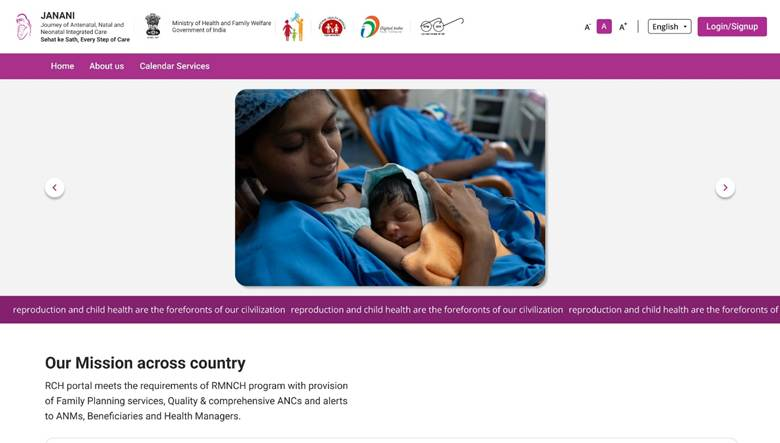
- About: JANANI is a service-oriented digital platform designed to maintain longitudinal health records of women during their reproductive age. It has been developed as an upgraded version of the existing RCH portal.
- It tracks the continuum of care, including antenatal care, delivery, postnatal care, newborn care, and family planning, ensuring seamless monitoring, timely interventions and continuity of care.
- Features: JANANI introduces QR-enabled digital Mother and Child Health cards, automated alerts for high-risk pregnancies, real-time dashboards for supervisory review and due-list generation.
- It enables beneficiary registration through unique identifiers such as ABHA, Aadhaar, through OTP and biometric authentication, and mobile number, ensuring pan-India portability and seamless tracking of beneficiaries.
- Integration & Interoperability: It is designed to integrate with U-WIN and POSHAN, while also supporting self-registration through web and mobile platforms, improving accessibility, especially for migratory populations.
- Achievements: The platform has registered 1.34 crore beneficiaries, including over 30 lakh pregnant women, generated 30 lakh MCH cards, and completed over 1 lakh biometric verifications.
- Significance: JANANI strengthens continuity of care and real-time monitoring, enhances service delivery and accountability, and contributes to improved maternal and child health outcomes through digital health governance.